How — To achieve it in organizations
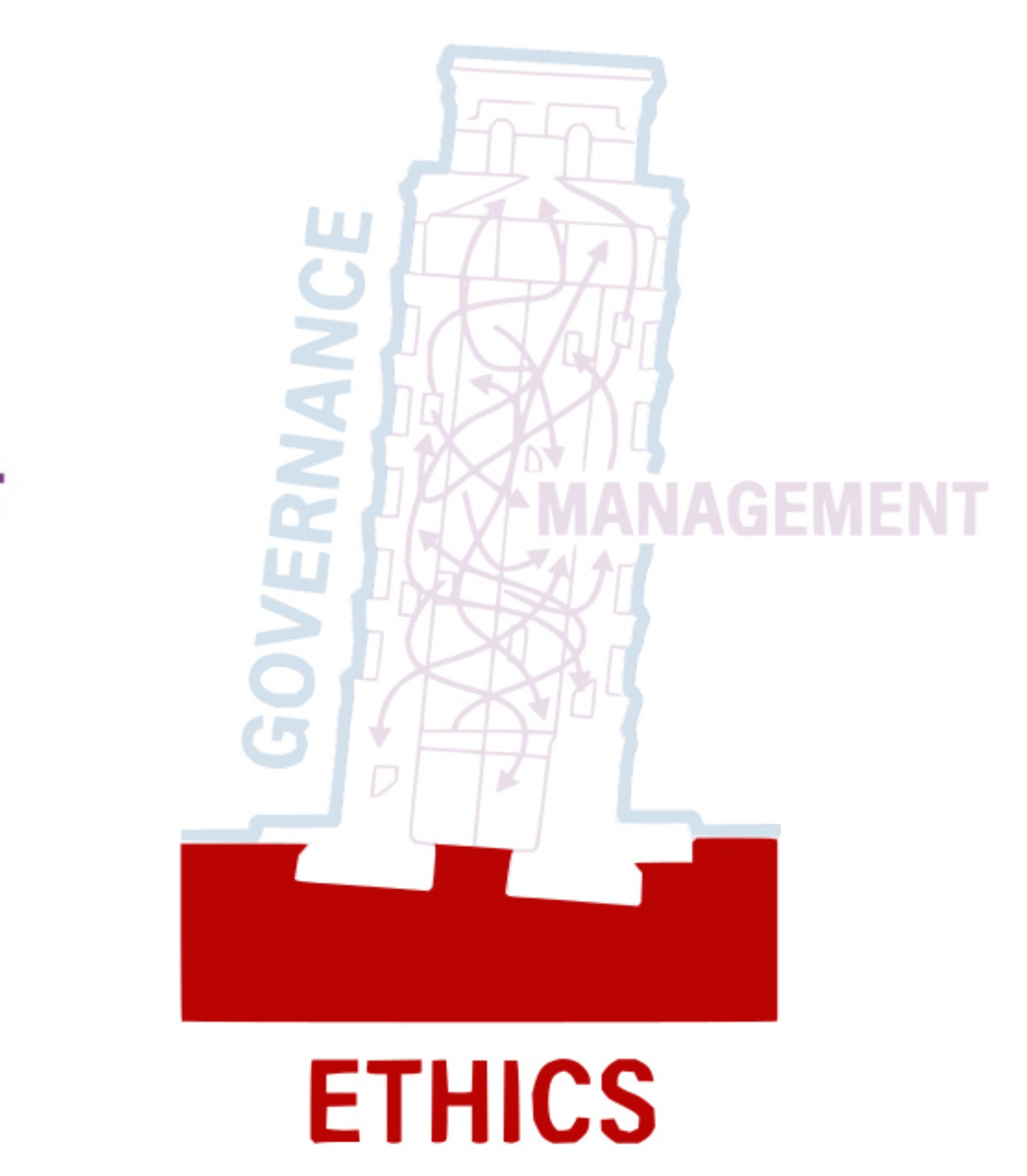
Ethics provides essential foundations for effective and ethical governance and management of AI integrations.
Ethics is an AI
integration layer
How ethical management looks through this lens
Ethical management is where ethics becomes real in an organization. It is where regular training, coaching, and appropriate support empower people to do good things in ways that they understand.
How ethical governance looks through this lens
Ethical governance helps enforce ethical baselines within groups, so that people have a secure base for exploration. It also helps people understand, and sometimes re-evaluate and change, how group decisions are made.
How the AGF looks through the Ethical Lens
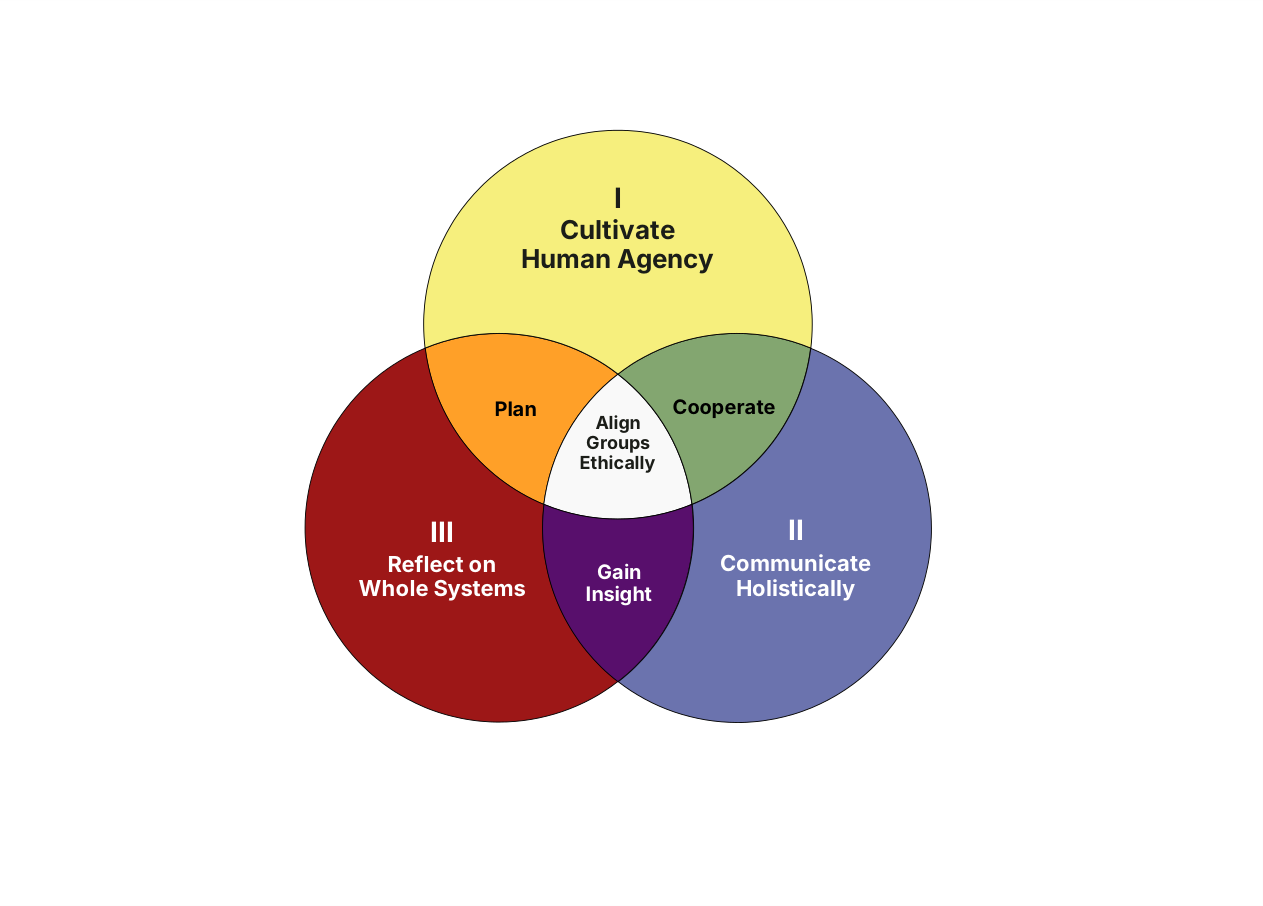
The AGF is a framework for ethical alignment among humans. Groups that have this framework have a shared language for ethically aligning people so that we can ethically align our AI systems.
Ethics Alone
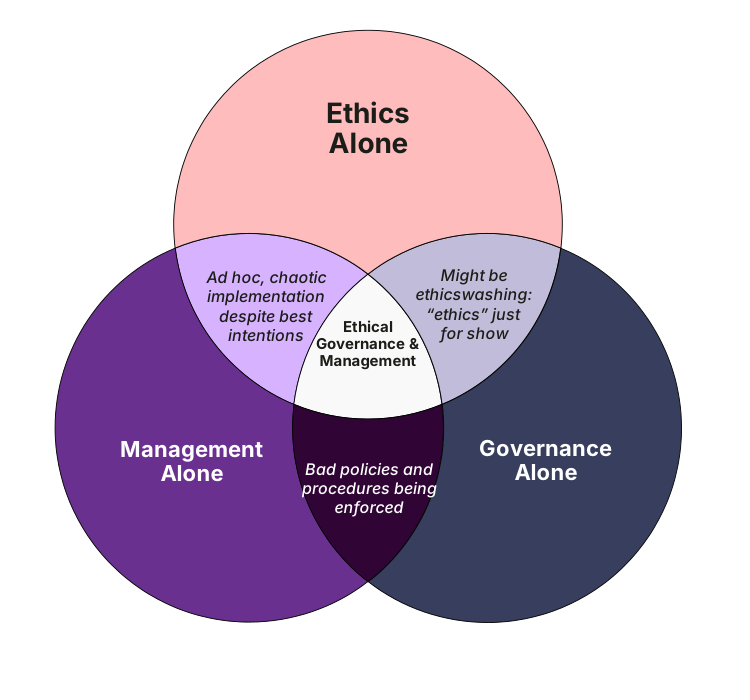
Good frameworks without clear ways or means to make them real. Might be ethicswashing: “ethics” just for show.
Management Alone
Ad hoc, chaotic and bad management being practiced. Without ethics or governance, there are no standards to manage toward.
Governance Alone
Bad policies, procedures, risk assessments and decision rules sitting on a shelf. Without ethics, governance has no moral foundation.
Together: Ethical Governance & Management
When all three work together, ethics provides the foundation, governance enforces baselines, and management makes it real day to day.
AI ethics specialists should help and support all of us in our practice of ethical citizenship in contexts that integrate AI.
The Plum Diagram helps
articulate ethics roles
AI Ethics Research Specialists
This is a field of professional research in academic journals, professional organizations, and applied practice and research. They provide broad contextualized questions, blindspot checking, and special attention to difficult edge cases.
Citizen AI Ethicists
Citizen AI ethicists don’t require much special expertise. They just need basic understanding and a willingness to act ethically. This is the “fruit” of AI ethics practice — the most significant for most people most of the time, because it involves us all.
Ethical Governance & Management Specialists
This is the hard core of AI ethics, and can include explaining and implementing the “hard ethics” involved in governance and legal frameworks. This group ideally evaluates and provides constructive accountability as independently and rigorously as possible.
Your AI ethics charter is primarily for people in your group who will use it to provide reasons to do, and not do, certain things.
Good AI ethics charters are serious commitments that will impact how your organization makes and enacts decisions. If you try to use them as an image management tool, rather than an authentic commitment, charters can easily backfire. That is a feature, not a bug: it reflects the soft ethical enforcement that makes it possible to initiate and sustain further ethical governance and management.
By summarizing your framework in a way that is designed to be understandable and useful, primarily to your internal organizational audiences, ethics charters communicate a set of commitments that your organization abides by, and which you plan to make real through governance and management decisions.
An AI ethics charter may also end up helping you with reputational risk, if you start by taking it seriously as a governance and management document. In this way, it is similar to a legitimate Constitution or serious public declaration.
A full framework aims to provide a reasonably compact and a reasonably complete summary of a group’s ethical commitments.
The AGF can be embedded in whole AI ethics frameworks which define a variety of broader principles, imperatives, ideals, and other commitments. Groups that have this framework have a shared language for ethically aligning people so that we can ethically align our AI systems.