What’s in it for my organization?
The Aligned Groups Framework (AGF) helps your whole team understand and communicate about why and how you are integrating AI.
It jump-starts a dynamic process that leads directly to ethical governance and ethical management of AI integrations.
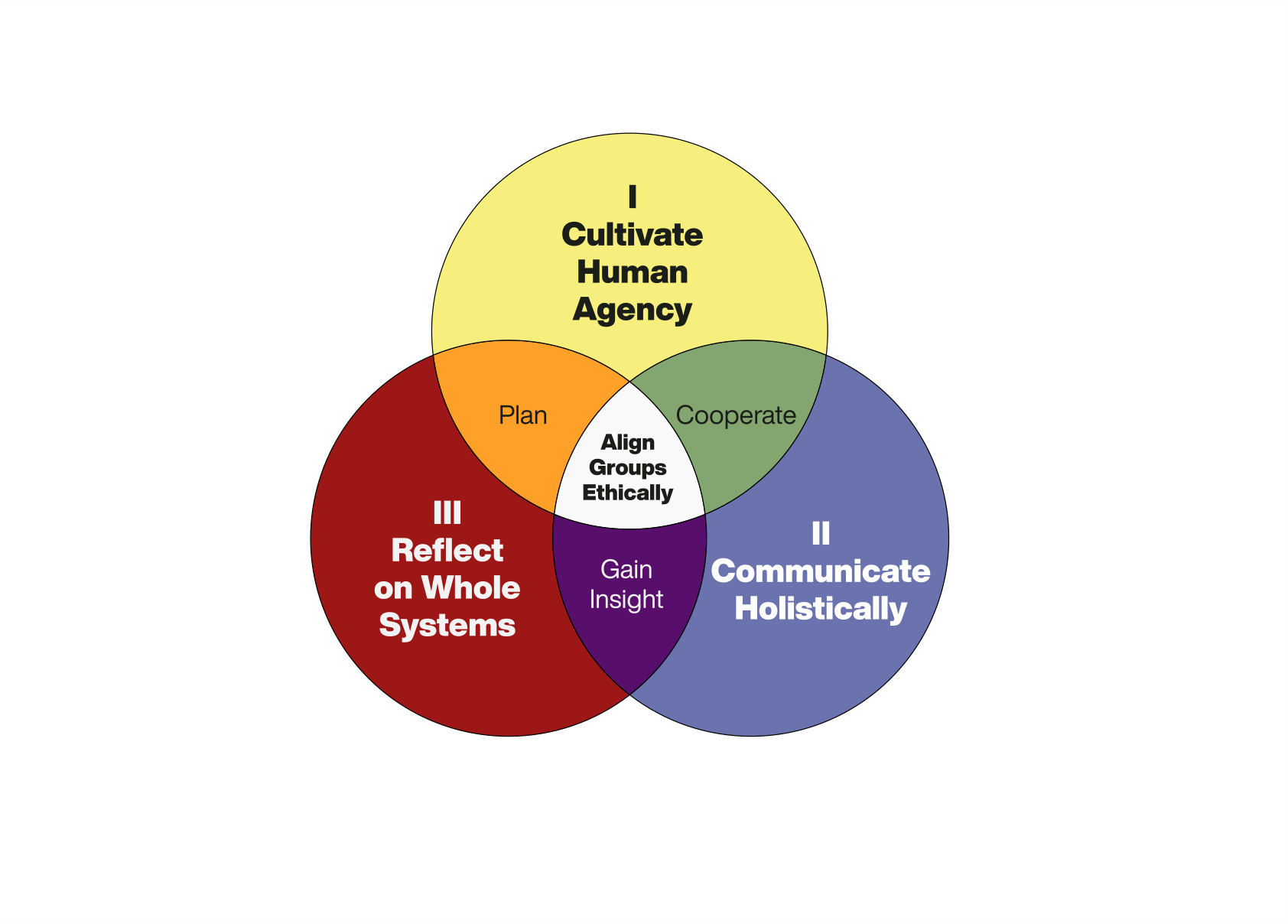
Work clockwise · start with the orange step
What existing planning rhythms give us a chance to reflect on our current AI usage, and create realistic goals for future states?
How can we prioritize AI integration in our existing planning processes?
Do we need to introduce new planning processes to enable the kind of flexible, ongoing work that AI integration requires?
How does AI relate to human agency in our organization, in terms of both threats and opportunities?
Who are our stakeholders, broadly understood? How should we engage them about our AI use in ways that respect and expand their agency?
Who on our team is a champion for ethical and effective AI integration? How can we empower them to do more?
When we really cultivate agency, it gives people good reasons to trust us. That also gives them good reasons to cooperate and communicate further. This is why holistic communication depends on creating an environment where people have good reasons to trust us to use AI to cultivate and support their agency, rather than undermine and replace it. Ethical cooperation becomes possible where agency and communication meet.
What should our AI use disclosure policies be internally and externally? How can we make it easy to track and disclose AI use?
How can we use systems to make more time for authentic communication within our team, and with customers, clients and other stakeholders?
How can we coordinate expert review to ensure that AI-generated and AI-assisted outputs are factual and ethical?
When our team communicates holistically, we can gather their input and other data together, look at it as a coherent whole, and transform isolated data points into something truly informative. This makes insight possible. But to really gain insight, we have to deliberately spend time reflecting on the system as a whole in light of that information. This is especially true if our processes are highly automated and excellent.
When will we sit down together and consider dynamic aspects of our AI integration, like workflows, as well as static aspects, like our organizational structure, and how they all fit together? What does it feel like to work with AI in our organization?
We are now poised for a more impactful kind of planning, based on deepening ethical alignment among the people in our group. This is essential so that you can keep aligning new, more powerful AI systems with your group. As ethical alignment deepens alongside expanded AI use, planning improves. This creates a virtuous cycle, in terms of both ethics and organizational strategy.